


In 1936, a woman climbed into a single-engine plane in England, pointed it west, and flew alone across the Atlantic Ocean in the dark. No co-pilot, no navigator, just sandwiches, a thermos of coffee, and roughly twenty hours of fuel. Her name was Beryl Markham, and if you haven’t heard of her, that’s not surprising.
Beryl grew up in British East Africa after her father moved the family to Kenya and her mother promptly decided that was not for her and quickly ran back to England, leaving her daughter behind. Whether that was cruel or just deeply inconvenient, it turned out to be quite formative for young Beryl. She grew up barefoot, hunting with Murani warriors, speaking Swahili and Nandi, and was mauled by a neighbor’s lion at age nine which left a scar, one she wore with pride.
By her twenties she was the first woman licensed as a racehorse trainer in Kenya. The patriarchal, colonial establishment mightily disapproved. But she kept training horses anyway, and the horses kept winning.
Then she decided to take to the sky and learned to fly.
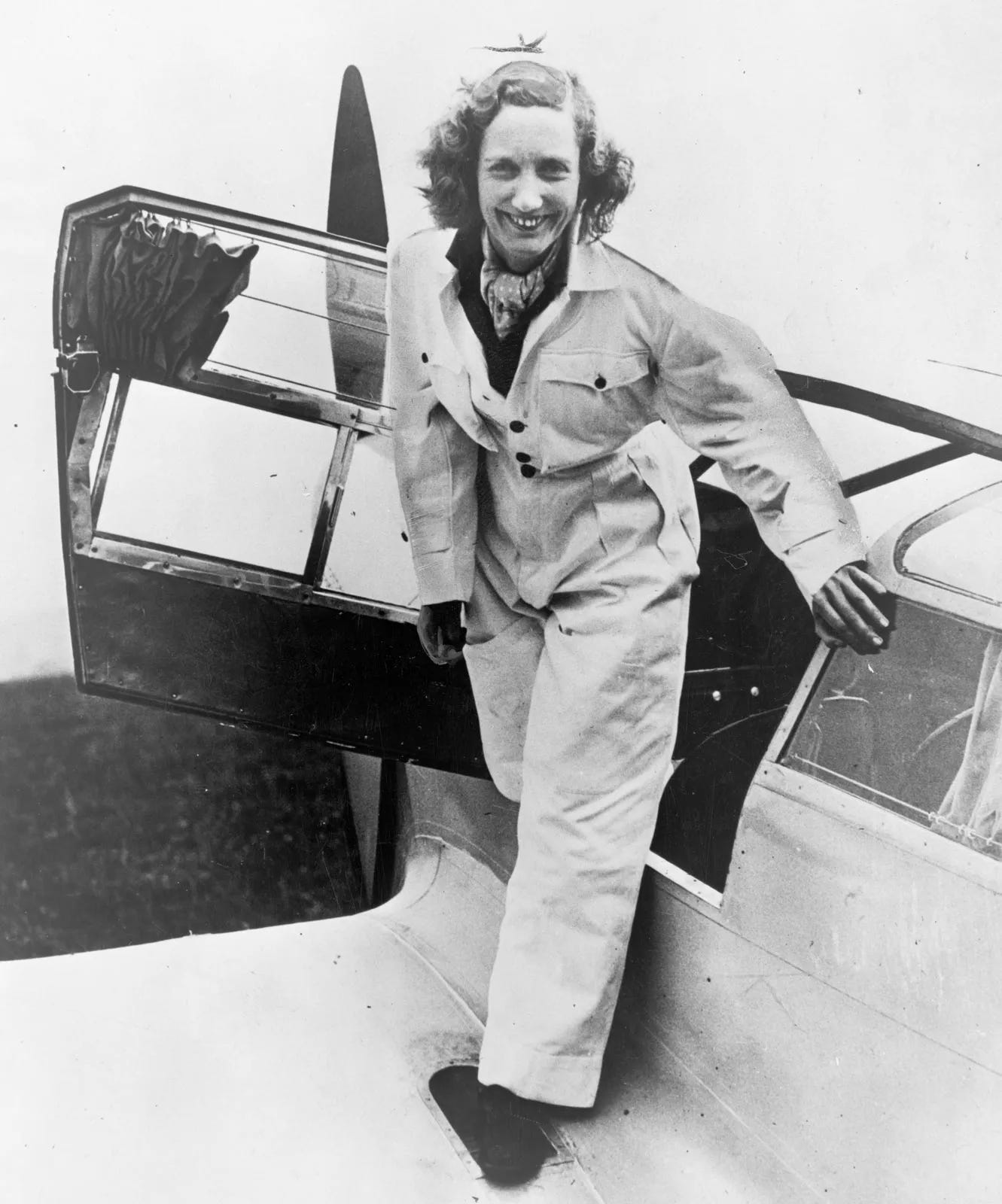
This was the 1930s, when aviation was still new enough that the planes shook in flight, the instruments were optimistic at best, and bad weather could end you before you had time to do anything about it. Beryl became a bush pilot over East Africa, spotting game for safari hunters below and, eventually started flying the sick and injured from remote outposts for emergency medical care. She was fearless, flying at night, during storms, and even courageously flew over unmapped terrain. More than once, she was the only reason someone survived.
She turned her sights at the Atlantic and thought: I bet I could fly across it. Not many people had.
The westward crossing from England to North America was the hard direction as one would fly into the headwinds the whole way. Several pilots had already died attempting it. No woman had done it solo. Nobody had done it nonstop all the way to New York. Beryl decided to tick all of those boxes at once, against the advice of everyone.
She took off from Abingdon, England on September 4, 1936, in a blue and silver Percival Vega Gull she had named The Messenger. Twenty-one hours later, ice had formed over her fuel tank vents, the engine was starving, and she came down nose-first in a bog in Cape Breton Island, Nova Scotia. Banged up, but alive.
She hadn’t reached New York. She had, however, crossed the Atlantic Ocean. Alone. East to west. Nonstop from England. Not only the first woman, she was the first person to accomplish the flight in that direction without stopping. It was an astonishing achievement. New York gave her a ticker-tape parade.
Six years later she published a memoir called West With the Night, and it is, without exaggeration, one of the most beautifully written books. Ernest Hemingway, who was not exactly in the habit of complimenting other writers, wrote privately to his editor that Beryl had written “a bloody wonderful book” and that it made him feel like a poor, overrated slob. That is, almost certainly, the nicest thing Hemingway ever said about anyone.
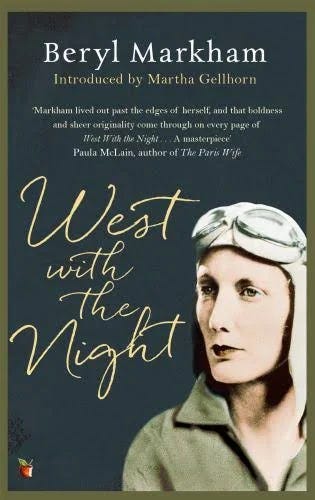
The book sold modestly and went out of print. Beryl moved back to Kenya in 1952, rebuilt her life, and became the most successful racehorse trainer in the country. She was quietly forgotten for her achievements and her writing.
Then in 1983, North Point Press reissued West With the Night, and everything changed. The book became a sensation. Readers passed it around like something urgent and remarkable. Beryl Markham, now eighty years old, received more recognition in a single year than in the previous four decades combined.
There was a catch, of course there was a catch! A journalist tracked her down in Kenya to write about this wonderful late-chapter triumph and found her living near the Nairobi racecourse in genuine poverty, in a small home that had recently been broken into, during which she had been beaten.
The woman who crossed the Atlantic, who flew the dying through storms to save them, who wrote one of the great adventure memoirs of the century was surviving on almost nothing.
She died in 1986, at eighty-three, in Nairobi. She had outlived the plane, the horses, most of the people who knew her as a young woman, and the first printing of her own book.
West With the Night is still in print. Pick it up and give it a read. You will find someone who chose the headwinds every single time and wrote about it in sentences that make you want to be a little braver than you are.
You can read more about Beryl Markham here and watch a short documentary about her life here. She deserves to be remembered.
An amazing person. Off to get myself a copy. Thank you for revealing such a legend.
I’ve got to read that! Another remarkable woman I’ve never heard of.