


While watching the coverage of the Obama Presidential Center’s grand opening something interesting caught my attention. Tucked into the campus is a room named for Sojourner Truth.
It’s a small gesture inside an enormous undertaking, but it’s the kind of detail that deserves a second look. Truth was born enslaved in upstate New York around 1797, freed herself, and went on to become one of the most formidable orators of the nineteenth century, a woman who argued for abolition and for women’s rights at a time when most Americans weren’t prepared for her to do either. She never learned to read or write, dictated her own narrative to a friend, and still managed to outmaneuver hecklers, hostile newspapers, and at least one judge who tried to have her committed.
Therefore a dedication, more than a century and a half later, in a building meant to look forward rather than back, seems like a good occasion to remember who she actually was, separate from the single speech (Ain’t I a Woman?) she’s mostly remembered for and the myths that have grown up around it.
She was born to enslaved parents without an official recorded date, because no one thought her beginning was worth writing down. Isabella Baumfree (or Bomfree/Bomefree/Bombfree, there is no official record of the correct spelling, at least none that I could find) entered a world that had decided that her life, body and mind were all property.
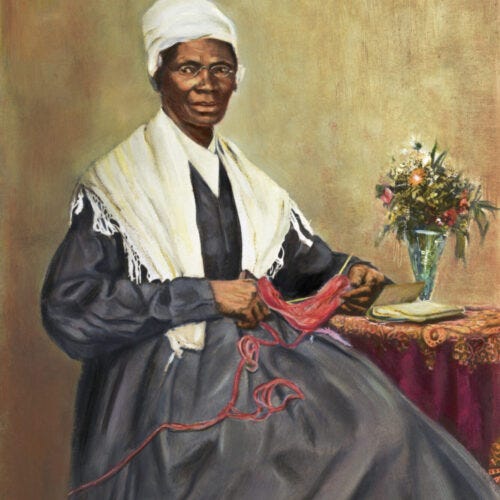
At nine years old, she was sold. The price: $100. The same as a flock of sheep. She would be sold twice more. She endured what so many enslaved women endured without record or acknowledgment. It was a life of brutal labor, violence, the forced separation from their children, a life lived inside a system that recognized a woman’s body but refused to recognize her humanity.
Isabella was enslaved by John Dumont in Ulster County, New York. New York State finally prepared to grant Baumfree legal freedom in 1827, Dumont had promised her freedom a year ahead of New York’s official emancipation date, in recognition of her work, but after she injured her hand and her output slowed and the promised time came, he reneged, claiming her injury had cost him too much labor to justify it. She felt the broken promise released her from any further obligation to him and plotted.
In the dark of night in 1826, she wrapped her infant daughter, Sophia, in her arms and walked away. She left behind older children she had no legal power to take. She carried that grief heavily. She found refuge with a Quaker family, the Van Wagenens, who paid $20 to secure her freedom.
Before she left, Dumont had given her verbal assurance that her five year old son Peter would stay in New York and eventually be freed under state law. Instead, Peter was illegally sold across state lines to a man in Alabama, where slavery remained legal and where New York’s gradual emancipation laws had no reach. This enraged her. A second promise of freedom broken by her former enslaver. She was not going to let is lie. Instead, Truth pursued the case relentlessly, eventually securing legal help and bringing suit to force Peter’s return. She won, becoming one of the first Black women in the United States to sue a white man in court and prevail, and got her son back, though by then he’d been abused and permanently marked by the experience.
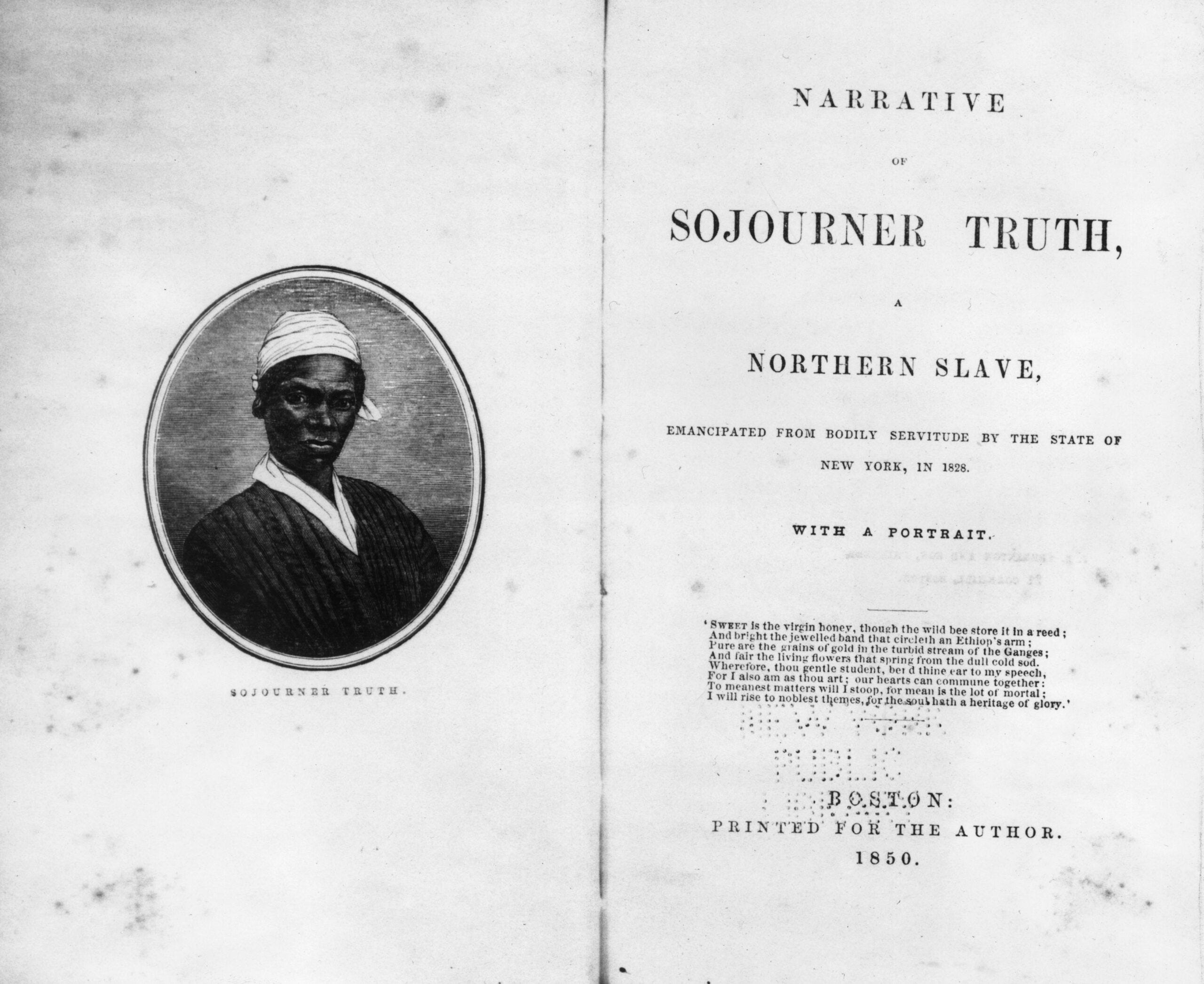
In 1843, she felt a calling so deep she changed her name to carry it. She became Sojourner Truth, a traveler who speaks what is real. Because she was unable to read or write, she dictated her life story to a white abolitionist who helped her publish it, because she had things the world needed to hear and she found every available way to make it listen. The book, The Narrative of Sojourner Truth gave her national recognition. She used the income to buy her own home.
Then came a women’s rights convention in Akron, Ohio in 1851. She traveled there to be a part of it. Some in the room were arguing that women were too delicate for public life, too fragile for the messiness of politics and power. Sojourner Truth, a woman who had plowed fields, survived slavery, outwitted a courtroom, and walked through the night to freedom decided to stand up and speak. She looked at the room and she asked a single question, “Ain’t I a woman?”
She pointed to her own arms that had worked fields no one else could match and asked the crowd whether they saw a woman who needed help stepping over a puddle. Then asked them to look at what a woman truly was, not the pampered image they had constructed, but the full, powerful, unbreakable reality standing in front of them.
Speaking from the heart, not a prepared speech, within a few sentences, she exposed the quiet exclusion at the center of a women’s rights movement that had been built around the experiences of white middle-class women while quietly leaving Black women outside the frame entirely.
Her speech is considered a masterpiece in American rhetoric and her words became the foundation of what scholars now call intersectional feminism, the understanding that justice must account for the ways race, gender, class, and identity overlap and compound, or it is not justice at all.
She spent the rest of her life refusing to slow down. She recruited Black Union soldiers during the Civil War, including her own grandson. When a Washington D.C. streetcar conductor physically blocked her from boarding, she had him arrested and won (again!). She met Abraham Lincoln. She met Ulysses S. Grant. In 1872, she attempted to vote in a presidential election and was turned away at the door, nearly fifty years before voting rights would be extended to women, and longer still before those rights would be meaningfully accessible to Black women.
She died in Battle Creek, Michigan, on November 26, 1883. She was approximately 86 years old. She had carved her name into American history using the only tool no one could legally take from her, her voice, and she never stopped using it.
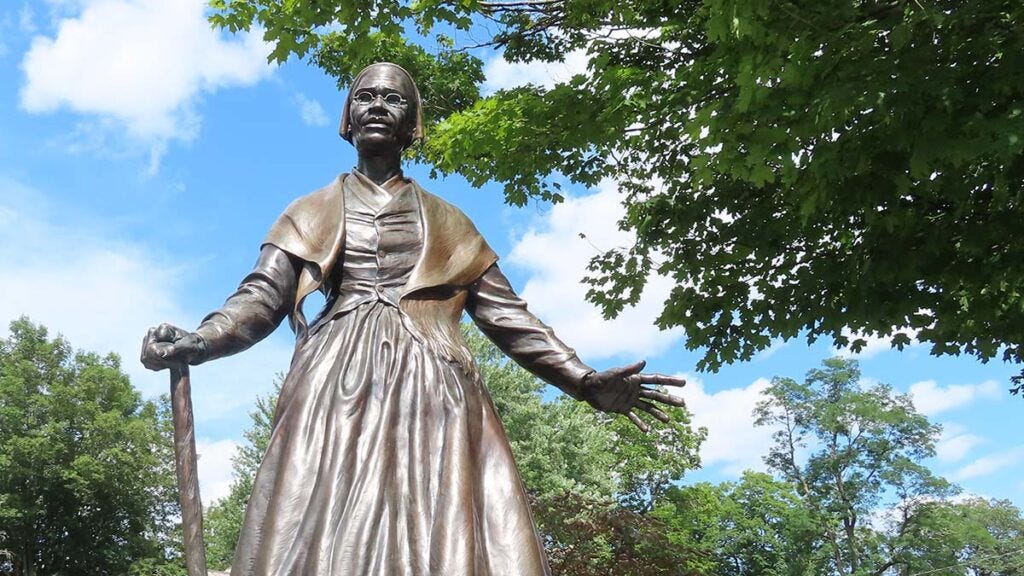
In 2009, a bronze bust of Sojourner Truth was installed in the United States Capitol. The woman once sold for the price of a flock of sheep, now standing in the building where the laws that once enslaved her had been written. And now she will be memorialized again the Obama Presidential Library. Her question still echoing off the marble walls. “Ain’t I a woman?” Yes, indeed she was.
You can read more about Sojourner Truth here and here. You may also watch Oprah Winfrey’s homage to her here. You can find a website dedicated to her here. You can find her Obama Presidential Center information here. If you’re feeling adventurous, you may visit statues created in her honor in Manhattan’s Central Park, Battle Creek Michigan, or in the US Capital Visitors Center in Washington. You may also visit her national park in New York State.
Thank you for teaching me something today.
Thank you. Even though I know I stand on the shoulders of so many other women who came before me, it is still heart-wrenching and strengthening to know more of their stories.