
Stop Chasing Trends and Write What You Actually Want
Why chasing trends is hopeless and why that’s actually good news.

Every few weeks, a writer asks me, “What’s trending right now? What should I be writing?”
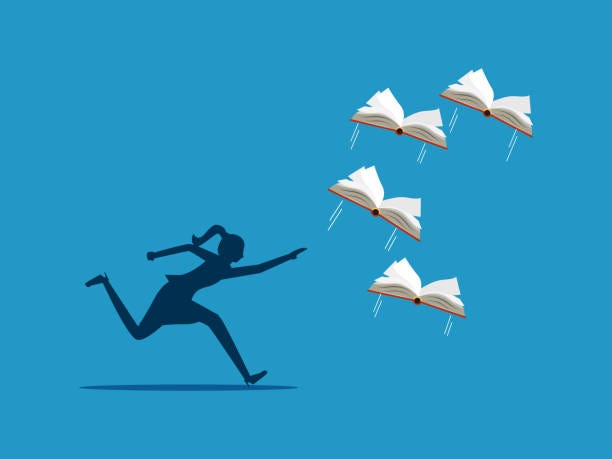
And I always want to say: Whatever the trend is, you’re too late. By the time a trend reaches its peak, it’s already plateauing or on the way out. Publishing is unpredictable. Who knows what the next big thing will be?
Publishing moves glacially in some ways (contracts, anyone?) and lightning-fast in others (remember how quickly cozy fantasy went from niche to everywhere?). Trying to chase a trend is like trying to catch the subway: you hear it rumbling, you run down the stairs, and the doors close just as you get there. New Yorkers will feel that one.
The Mirage of Market Desire
Here’s a secret from behind the curtain. When editors say, “We’re tired of dystopia,” it doesn’t mean they’ll never buy another dystopian novel. It means they’re tired of bad dystopian novels. The right one, sharp, funny, heart-stopping, will still get snapped up. The same goes for memoirs, thrillers, romances, anything that’s supposedly “over.”
In other words, editors don’t really know what they want until it’s in front of them. They’re like dinner guests who swear they’re not hungry until someone brings out dessert.
Why This Is Actually Liberating
Here’s the hopeful bit. You can stop worrying about what’s “in.” You don’t have to write to the market, because the market doesn’t know what it wants anyway. Trends can give us a sense of what editors are receptive to, but the books that break out, the ones that make trends, are almost always the ones no one asked for.
That’s good news. It means you don’t have to force your idea into someone else’s mold. You just have to write the book only you can write. If it’s funny, strange, heartbreaking, joyful, if it feels alive it will stand out more than whatever everyone else is chasing.
The Mirage of Momentum
Chasing trends feels productive. You tell yourself you’re being strategic, leaning into demand, giving the people what they want. But trends move faster than your ability to master them. By the time your “hot take” or manuscript is ready, the internet and the industry have already moved on. You end up exhausted and wondering why you’re not seeing the traction you hoped for.
Writing What You Actually Want
The alternative is slower and quieter, but infinitely more powerful. When you write what you actually care about, what keeps you up thinking, what you’d talk about even if no one listened, you build something lasting.
That kind of writing doesn’t expire. It compounds.
It also attracts the right kind of readers: The ones who come for you, not for the topic of the week. Those are the readers who will stick around because they trust your perspective. That’s how real communities form.
But What If No One Reads It?
They might not, at first. That’s okay. Early writing is like sending out a signal, a frequency only a few people can hear. Those first readers are your foundation. If you stay true to your own signal, more people will eventually tune in.
If you keep chasing trends, you never get the chance to build that resonance. You’re constantly switching stations before anyone can recognize your voice.
The Writer’s Compass
Before you hit publish, ask yourself: Would I still write this if no one read it?
If the answer is yes, you’ve found your compass. Follow it. The metrics might be slower, but the meaning will be deeper.
Write the thing that feels risky. The thing you can’t not say. The thing that feels too personal, too weird, too niche. That’s where your real edge is.
A Closing Thought
Trends will keep coming and going. Romantasy is hot today; tomorrow it will be something else. But literature isn’t built on trends. It’s built on conviction. And that conviction is yours in writing the book, and an editor’s in taking a chance on it.
Consider this your permission to write the book you want to read.
Write what you want. The rest will catch up eventually.
I love everything about this! I am just starting on my creative writing journey and my goal is to write a novella or a novel. Since I've never done this before, I don't have any expectations, I only want to accomplish the act of writing an entire story! And your post encourages me to do just that!
Completely agree, Erin! I also ask myself (and recommend clients ask themselves), "Is this a story only I can write?" If the answer's yes, I know it's the right idea.